
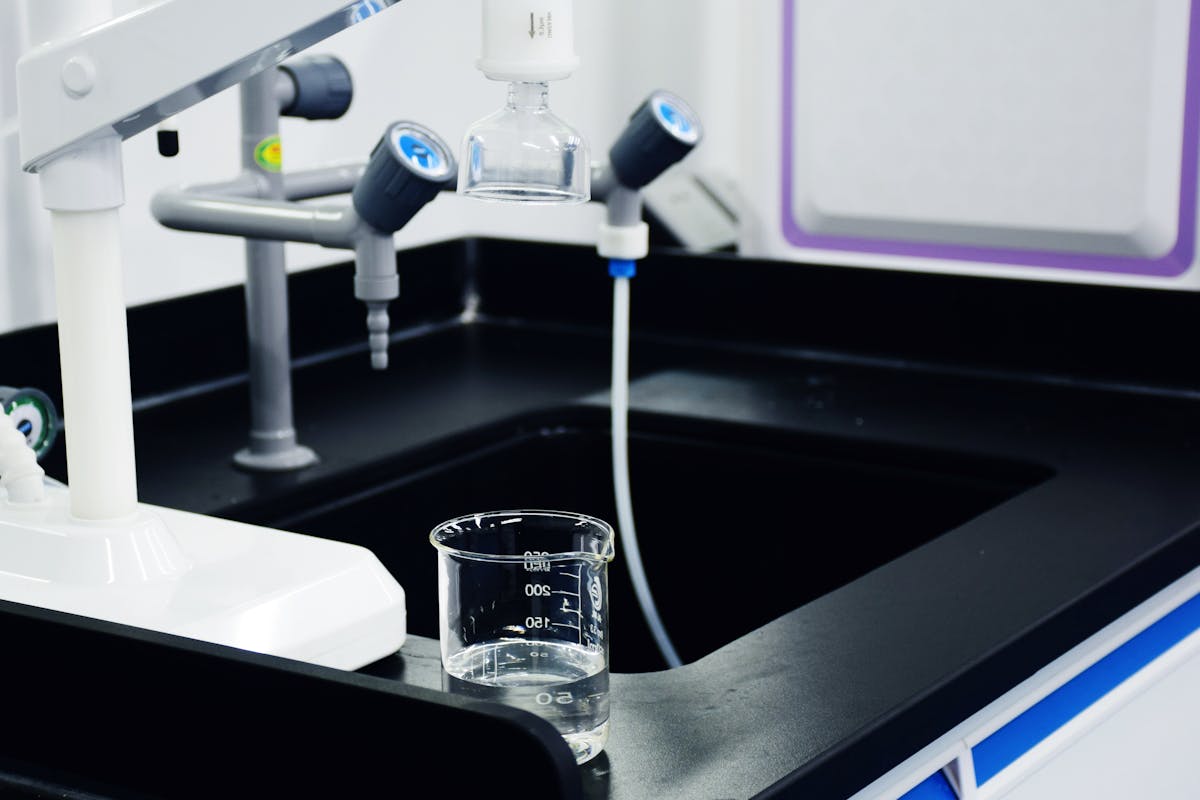
Drinking water and wastewater analysis is the verification, through accredited laboratory testing, that the quality of a facility's water sources and effluent complies with legal and engineering standards. For drinking water quality, TS 266 and the Regulation on Water Intended for Human Consumption, and for wastewater discharge, the Water Pollution Control Regulation (SKKY) and related communiqués, define the frequency of these analyses and the evaluation criteria. Regular analysis is critical not only for legal compliance but also for public health and environmental protection.
Drinking Water Analysis Parameters
| Category | Parameters | Typical Frequency |
|---|---|---|
| Physical | Colour, odour, taste, turbidity, pH, conductivity | Monthly |
| Chemical (general) | Hardness, chloride, sulphate, nitrate, iron, manganese | Quarterly |
| Chemical (toxic) | Heavy metals (Pb, Cd, As, Hg, Cr) | Semi-annual - annual |
| Microbiological | E. coli, coliform, enterococci | Monthly |
| Radiological | Gross alpha, gross beta, tritium | Annual |
| Disinfection | Free chlorine, chlorine dioxide | Daily (on site) |
| By-products | THM (trihalomethanes), HAA | Annual |
Wastewater Analysis Parameters
| Parameter | SKKY Limit (Typical) | Significance |
|---|---|---|
| pH | 6-9 | For receiving-environment organisms |
| COD (Chemical Oxygen Demand) | 250 mg/L (table-based) | Organic pollution |
| BOD5 (Biochemical Oxygen Demand) | 50 mg/L | Biodegradable pollution |
| TSS (Total Suspended Solids) | 100 mg/L | Sediment, turbidity |
| Oil & grease | 30 mg/L | Hydrocarbon pollution |
| Ammonium nitrogen | 30 mg/L | Eutrophication |
| Total nitrogen | 15-50 mg/L (table) | Receiving-environment load |
| Total phosphorus | 1-3 mg/L | Eutrophication |
| Sulphate | 1,500 mg/L | Corrosion |
| Total chromium | 1-2 mg/L | Toxicity |
| Total cyanide | 0.1 mg/L | High toxicity |
| Colour | 280-500 Pt-Co | Aesthetics + photosynthesis |
Stages of the Analysis Process
- Sampling plan: Which points, at what frequency and what type of sample (grab, composite) will be collected.
- Field sampling: Sample containers, cooling conditions and labelling in line with the accredited method.
- Cold-chain transport: Samples are transported to the laboratory at 4°C within 24 hours.
- Accredited laboratory analysis: Measurement of parameters using ISO 17025 accredited methods.
- Interpretation of results: Comparison against the limit values in the relevant regulation.
- Official report: An accredited test report; added to operational records and submitted to the Provincial Directorate of Environment.
- Action plan: Engineering analysis for corrective measures where a limit is exceeded.
Online Monitoring Systems (CEM)
The Ministry of Environment requires Continuous Emission Monitoring (CEM) and Continuous Wastewater Monitoring (CWM) systems to be installed in certain sectors. CWM data flows directly and in real time to the Ministry. When the wastewater project for a new facility is being designed, the technical requirements of this monitoring obligation must be incorporated into the planning.
Water analyses are not merely a legal compliance document; they are an indicator of the facility's operational health. Regular analysis detects problems before they grow.
Frequently Asked Questions
- How many times a year should drinking water analysis be performed?
Parameters that pose a risk to public health (microbiological, disinfection) monthly. Other parameters quarterly or annually. This varies according to the water source and the method of storage.
- What happens if the wastewater discharge limit is exceeded?
An administrative fine is imposed (in the range of TRY 10,000-200,000). For repeated violations, the Environmental Permit may be suspended. In cases of serious pollution, judicial proceedings may be initiated.
- Is analysis from a non-accredited laboratory valid?
It is not accepted in official inspections and insurance processes. Reports issued by ISO 17025 accredited laboratories have international validity.
- How is a sample taken?
By sampling personnel trained by an accredited body, using containers and methods that comply with the standard procedure. Incorrect sampling can invalidate the entire analysis.